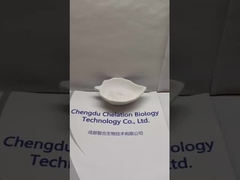
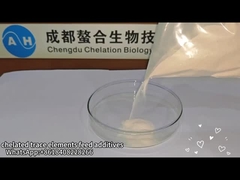
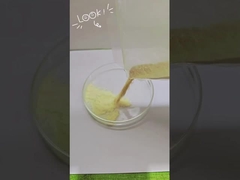
Brief: Cette vidéo explique les principales fonctions et les utilisations pratiques du chélate d'acide aminé de méthionine et de manganèse pour les aliments pour animaux, de manière claire et étape par étape. Découvrez comment cette poudre blanche claire favorise la croissance animale, le développement osseux et les performances reproductives.
Related Product Features:
Chelated manganese with methionine in a stable five-membered ring structure for enhanced bioavailability.
Provides a high biological potency manganese source for animal metabolic enzyme synthesis.
Promotes normal bone growth and prevents developmental disorders in young animals.
Supports reproductive performance in breeding animals and prevents leg and foot diseases.
Contains ≥35% methionine and ≥15% manganese content for effective supplementation.
Meets strict safety standards with low levels of lead, cadmium, and arsenic.
Available as a light white powder or micro granule with ≤5% moisture content.
Packaged in 25kg kraft paper bags with inner plastic lining for secure storage.
FAQ:
What is the main function of manganese methionine chelate in animal feed?
It provides a highly bioavailable manganese source that activates glycosyltransferase and participates in protein, fat, and carbohydrate metabolism, supporting animal growth, bone development, and reproductive function.
How is this manganese chelate different from inorganic manganese sources?
The methionine chelation creates a stable five-membered ring structure that enhances bioavailability and biological potency compared to inorganic sources, making it more effective for animal metabolic processes.
What are the recommended dosage guidelines for different animal species?
Dosage varies by species: pigs (8-138 mg/kg), broilers (298-759 mg/kg), layers (166-586 mg/kg), with specific amounts for ducks, geese, cattle, and fish. Consult your formulator for precise usage based on your formulation needs.